
The treatment gap
The first US inpatient perinatal psychiatry unit opened at UNC in 2011 with 5 beds. A recent count found five such programs nationally and 45 states with none. The first national strategy for maternal mental health was released in May 2024.
This Is Why, Part 4 of 7: The first postpartum medication arrived in 2019
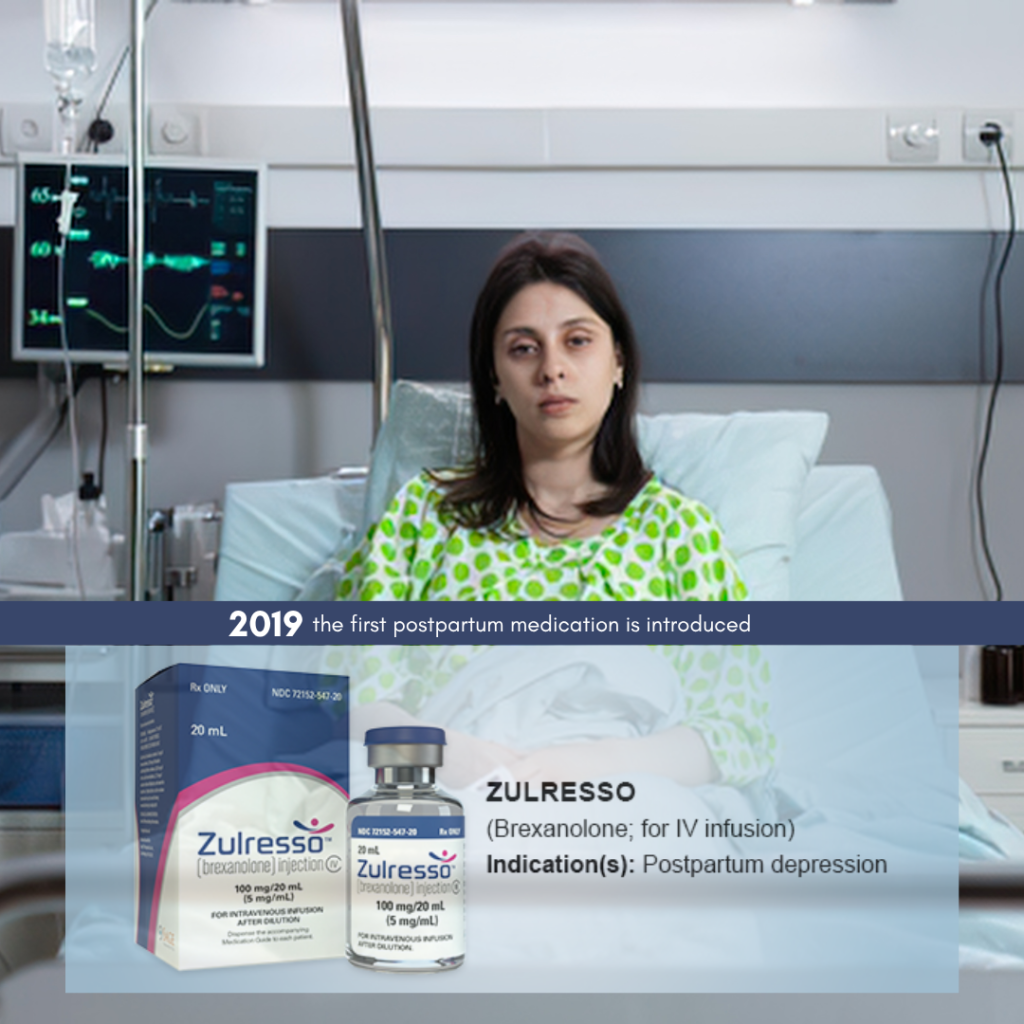
For most of modern medicine, there was no drug developed and approved specifically for postpartum depression. Women were treated with medications developed for depression in general, often never tested in pregnant or breastfeeding women (see Part 2).
The first approval came on March 19, 2019: brexanolone, sold as Zulresso. (Drugs.com)
It was a real milestone, and also nearly impossible to get. It was given as a 60-hour IV infusion, which limited how many women could use it. (MedCity News) It was discontinued at the end of 2024, and the FDA formally withdrew its approval as of April 14, 2025. (Federal Register)
The second approval came on August 4, 2023: zuranolone, sold as Zurzuvae, the first pill for postpartum depression. It is taken once daily for 14 days. (WebMD) Today it is the only medication approved specifically for this condition.
Let that sit for a moment. The first treatment built for postpartum depression lasted about six years on the market. The country currently has one.
None of this means medication is wrong for postpartum women. For many it is lifesaving. It means women deserve treatment based on research done on women like them, and care that goes beyond a prescription.
This is why.